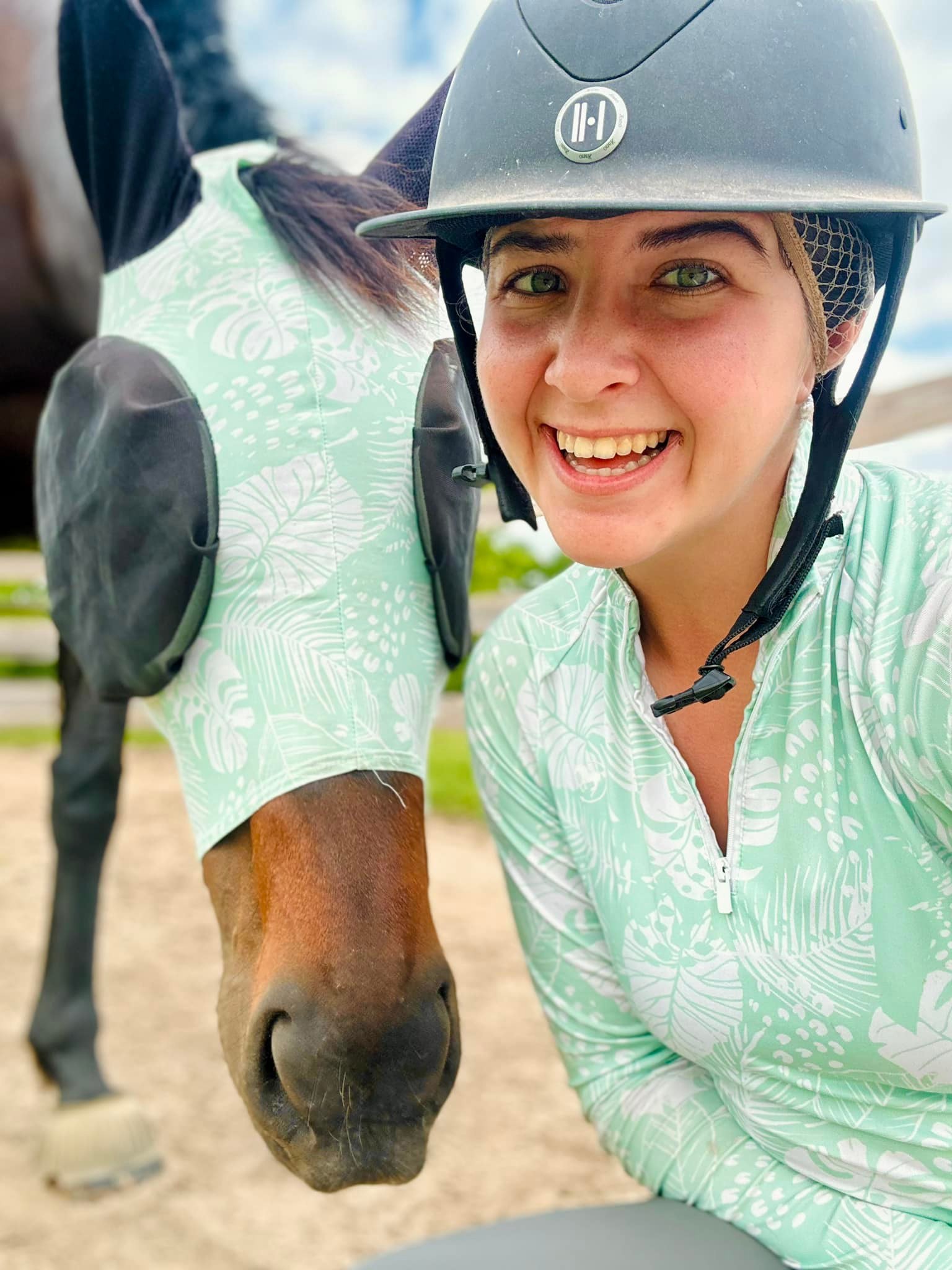
By minute twenty of a July schooling session in Aiken, something happens that has nothing to do with skill level. Your pelvis gets heavy and stuck. Your elbows glue to your sides. Your shoulder blades creep toward your ears. You’re gripping things you don’t remember deciding to grip. And if someone filmed you right now, you would not recognize yourself.
That’s not weakness. That’s heat fatigue, and it’s a biomechanical event — not just a comfort problem.
Most riders treat summer position breakdown as a willpower issue. They tell themselves to sit up, soften their hands, breathe. But when your nervous system is overloaded by heat, those verbal reminders land on a brain that has genuinely deprioritized motor refinement. Your body is busy keeping you alive. Postural precision is not the priority right now.
Understanding what’s actually happening — and having a real strategy — is how you stop losing half your ride to it.
What Heat Fatigue Actually Does to Your Body
Heat stress triggers a predictable cascade. Blood gets redirected to the skin for cooling, which means less oxygen reaching working muscles. Core temperature rises. The brain starts rationing cognitive resources. Fine motor control — the kind that lives in your fingers, ankles, and seat — degrades first.
Here’s what that looks like on a horse:
Your pelvis locks. The small intrinsic muscles around your sacrum and hip joints fatigue early because they’re working constantly to absorb movement. When they’re depleted, your pelvis stops following and starts bracing. You lose the independent, absorbing seat that makes everything else possible.
Your hip flexors shorten. When you’re hot and tired, you unconsciously curl forward — it’s a protective posture. Your hip flexors contract and your lower back rounds slightly, which tips your weight behind the motion. You look like you’re sitting on the back of the saddle even if you’re not.
Your hands stiffen. The forearm flexors fatigue faster than most riders realize. When they do, your fingers close and your wrists lock. Contact gets hard and fixed. Your horse feels it immediately, even if you don’t.
Your breath goes shallow. This one is the multiplier. Shallow breathing in the upper chest keeps your ribcage up and tight, which locks your thoracic spine, which locks your shoulders, which locks your elbows. Every joint downstream from your ribcage is now stiff.
This isn’t you having a bad ride. This is physiology. And once you see the pattern, you can work with it instead of against it.
The Early Warning Signs to Catch Before It Compounds
The window between “starting to fatigue” and “position has fallen apart” is maybe ten minutes. Learn to catch it early.
The first thing I notice in myself — and in every rider I work with — is the breath going quiet. Not stopping, just flattening. Short, controlled, contained. That’s the nervous system beginning to conserve. When I catch it, I know I have about five minutes before everything else starts to follow.
Other early signals:
- Your horse starts pulling subtly against a contact that’s gotten heavier without you noticing
- You feel like you’re working harder to maintain the same gait quality
- Your inside leg keeps sliding back without you meaning to move it
- Simple transitions feel effortful when they weren’t ten minutes ago
- You’re thinking about the ride instead of feeling it
Any one of these is a flag. Two or more is a reset moment.
Three Things That Actually Help Mid-Ride
These are not generic advice. These are specific interventions, in order of how quickly they work.
1. A long rein walk with a deliberate exhale
Not a throw-away break — a purposeful one. Give your horse a long rein and ask for a forward, swinging walk. Then exhale completely. Not a normal breath out — empty your lungs. Let your ribcage drop. Feel your sternum soften. Do this three times.
The reason this works is mechanical. A full exhale releases the diaphragm, which releases the thoracic spine, which unlocks your shoulders and elbows almost automatically. You can’t force your upper body to soften from the outside. You have to come at it from the inside, through the breath.
Two minutes of this is worth more than ten minutes of pushing through.
2. Weight into your stirrups on a straight line
Pick up your reins again and find a straight line — down the long side or across the diagonal. Consciously push your heel down and feel your weight drop into the stirrup iron. Not gripping, not pushing your leg forward — just weight dropping.
This cue re-anchors your pelvis. When you’re fatiguing, the first thing that happens is your leg gets light and your seat gets stuck. Actively weighting the stirrup reconnects the chain: heel down, thigh back, pelvis level, lower back soft. It’s a reset point you can find in two strides.
3. One hand on your thigh, briefly
This sounds strange, but it works. In walk, take one hand and rest it lightly on the top of your thigh for about ten seconds. Notice where your leg actually is. Notice the weight of your arm. Notice what your shoulder does when your hand is there.
It’s a proprioceptive reset — you’re giving your nervous system new information about where your body is in space. When heat fatigue is degrading your position, your brain has often stopped accurately tracking your limb placement. This interrupts the feedback loop.
I’ve talked about nervous-system tools in the context of ride preparation on The Elevated Equestrian podcast, but these mid-ride resets work the same way — you’re giving your system something concrete to grab onto.
What to Stop Doing
Stop trying to hold yourself into position. Muscle tension is the enemy in heat. If you’re gripping your core to sit up straighter, you’re compressing the very joints you need to absorb movement. Stability in heat has to come from alignment, not effort.
Stop schooling the hard thing. If your position is compromised, your horse is getting inconsistent, unclear aids — and he’s adjusting to them. Every minute you school collection or lateral work with a fatigued, stiffening body is a minute you’re teaching your horse to interpret bad information. Drop back to something simple. Transitions on a loose rein. Forward and back within a gait. Let your body catch up before you ask for precision.
Stop ignoring the horse’s response. A horse that starts getting heavy in front, losing impulsion, or getting crooked mid-ride is often responding directly to a rider who has fatigued without realizing it. Before you school the horse, check yourself.
Building Tolerance — Before It’s a Crisis
The best time to address heat fatigue in your position is when you’re not already in it.
In early summer, before the heat becomes relentless, school specifically for short duration and high quality. Twenty minutes of deliberate, biomechanically clean work beats forty-five minutes of drift. You’re training your neuromuscular system to maintain precision under load — and load in summer is always higher than you think.
Off-horse, the single most useful thing most riders could do is breathwork. Specifically, extended exhale practice. If your exhale is habitually short, your ribcage is habitually stiff, and no amount of summer riding will fix that. Five minutes a day of deliberate breathing — in for four counts, out for six — builds the baseline capacity that actually shows up when you need it.
Core work matters too, but the goal is endurance, not strength. Planks held for longer, not weighted. Stability under fatigue, because that’s the actual condition you’re training for.
The Honest Truth About Summer Riding
You’re not going to feel as good in July as you do in April. Your horse isn’t going to either. Pretending otherwise leads to overschooling, frustration, and slow erosion of the things you worked all spring to build.
The riders who come out of summer stronger are the ones who work with the heat instead of against it — who shorten sessions, prioritize position quality over volume, and treat mid-ride fatigue as information rather than failure.
Your job in the summer is not to maintain peak performance. It’s to maintain quality of movement and quality of feel. Those two things will keep your partnership intact until the weather breaks.
If you want to work through your summer position issues in person — whether that’s a one-time lesson or a clinic day — I’d love to have you out. We can look at exactly where your position breaks down under heat and fatigue and give you specific tools that fit your body. Reach out at /contact to book a session in Aiken.