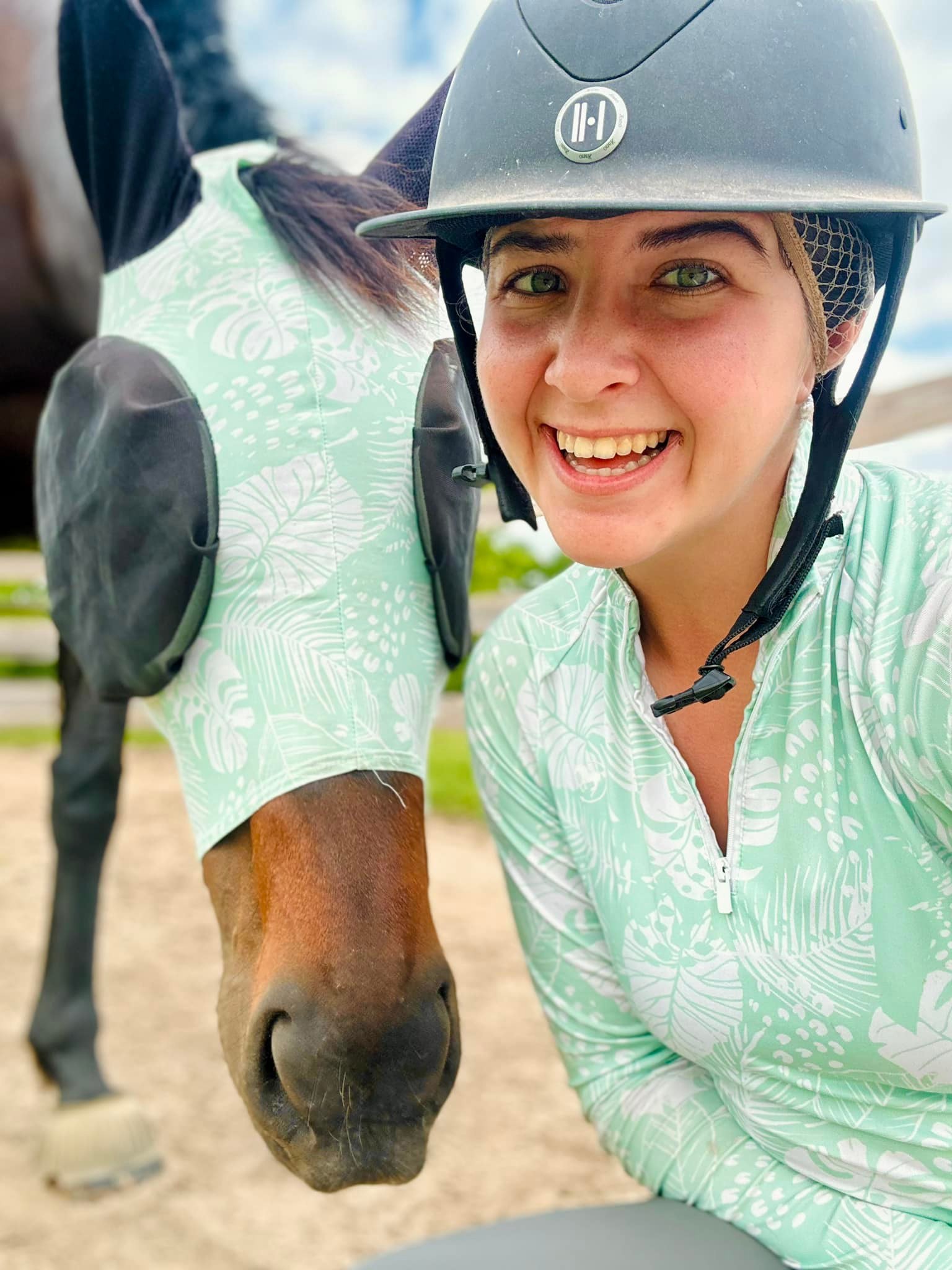
A summer coat should practically gleam. When it doesn’t — when the hair lies flat and chalky, when shedding drags on longer than it should, when the skin underneath feels dry and flaky regardless of how good your grooming routine is — most riders go looking for answers in a shampoo bottle. The answer is usually in the feed room. Specifically, it is usually in the omega-3 profile of your horse’s diet, and in whether the source you are feeding is actually delivering what a coat needs at the cellular level.
This post contains affiliate links. If you shop through them I may earn a small commission at no extra cost to you — and you’ll get my reader discount. I only feature gear I’d actually put on my own horses or wear for a full day in the saddle.
Why the Omega-3 Source Matters More Than the Quantity
Here is the thing most supplement labels quietly skip over: not all omega-3s are the same, and the distinction matters significantly for coat quality.
The omega-3s in flaxseed — and in most of the “omega” supplements on the market — are primarily ALA, alpha-linolenic acid. ALA is a short-chain omega-3. To do anything useful at the tissue level, including supporting skin cell membranes and the lipid barrier that makes a coat shine, ALA has to be converted by the body into long-chain omega-3s: EPA and DHA. Horses can make that conversion, but the research suggests it is inefficient. A meaningful portion of the ALA you are feeding never becomes EPA or DHA at all.
Mad Barn’s w-3 Oil sidesteps that conversion problem entirely. It supplies preformed DHA — derived from microalgae, which is the same original source fish get their DHA from — alongside EPA and ALA. The long-chain omega-3s are already there, ready to be used. That is the fundamental distinction between w-3 Oil and a flax-based product, and it is why many owners who switched to it report coat changes they did not see with years of flax supplementation.
The research on DHA specifically points to its role in cell membrane structure. Every skin cell in your horse’s body has a lipid membrane, and the fatty acid composition of that membrane affects how well the cell holds moisture, how smoothly it sheds, and how the skin barrier functions overall. Supporting that process with preformed DHA rather than relying on conversion is simply more direct.
What “Coat Quality” Actually Means at the Nutritional Level
When people talk about coat shine, they are often conflating a few different things that have different nutritional roots.
Surface shine — the gloss you can see from across the aisle — is largely a function of the lipid film on the hair shaft. That comes from sebaceous gland output, which is influenced by the overall fat and essential fatty acid status of the diet. An omega-3 source that actually reaches the tissue helps here.
Coat texture — whether the hair feels soft and dense or coarse and brittle — is more closely tied to protein quality, specifically the amino acid methionine, which is a sulfur-bearing amino acid essential to keratin synthesis. If coat texture is your primary concern alongside shine, it is worth thinking about whether your horse’s overall amino acid status is adequate. A forage analysis and a conversation with an equine nutritionist will tell you more than any label can. Mad Barn publishes a genuinely thorough writeup on omega-3s and equine nutrition — you can find it through their site — and their team is accessible for nutritional questions.
Skin condition underneath — dryness, flakiness, sensitivity — is where the anti-inflammatory support from long-chain omega-3s is most relevant. The omega-6 to omega-3 ratio in most hay-based diets skews heavily toward omega-6, which supports a more pro-inflammatory baseline at the tissue level. Supplementing with a source rich in EPA and DHA helps shift that ratio, which many owners feed for exactly this reason.
The honest note here: if your horse has significant skin issues, persistent dull coat despite good nutrition, or symptoms that concern you, that warrants a vet conversation before you reach for a supplement. Nutritional support is an adjunct to good veterinary care, not a substitute for it.
Mad Barn w-3 Oil: What You’re Actually Buying
Mad Barn’s w-3 Oil is a liquid oil supplement formulated to deliver a meaningful dose of preformed DHA alongside EPA and ALA, with natural vitamin E added to protect the oil from oxidation. That last detail matters more than it sounds. Omega-3 oils are vulnerable to rancidity, and rancid fat is not only less effective — it can actively work against the antioxidant status you are trying to support. The vitamin E inclusion is a formulation choice that reflects real attention to how the product behaves in a feed room environment.
The oil is derived from microalgae, which means it is a sustainable, fish-free DHA source. For owners who prefer not to feed fish-derived products, that is a meaningful distinction.
A few practical notes from owners who use it regularly:
Palatability is generally good. Omega-3 oils can be a point of refusal with picky horses, but w-3 Oil has a mild profile and most horses accept it without objection, particularly mixed into a small amount of carrier feed or forage. Start with a smaller amount and work up to the full serving over a few days if your horse is sensitive to feed changes.
It adds calories. Every tablespoon of any oil adds fat calories, and fat is calorie-dense. For a horse who needs cool calories without added starch — a hard keeper, a horse coming back from illness or injury, or an athletically active horse in summer heat — this is a benefit. For an easy keeper or a metabolically sensitive horse, you are managing the total caloric load of the diet, which means the amount of oil you feed matters and is worth discussing with your vet or nutritionist. w-3 Oil is safe alongside Mad Barn’s vitamin and mineral products, including AminoTrace+ and Omneity, but the caloric contribution is real.
Timeline for coat changes. Omega-3s work at the cellular level, which means you are not going to see results in two weeks. Most owners who report coat improvements are looking at a consistent feeding period of six to twelve weeks before the changes become visually obvious. The cells that make up a coat are constantly cycling — what you see in the coat today reflects the nutritional environment from weeks ago. Commit to the supplement long enough to actually evaluate it.
Ready to try Mad Barn w-3 Oil? Use my link for my reader benefits at Mad Barn → https://madbarn.com?ref=18219
How w-3 Oil Fits Into a Broader Coat Program
If coat quality is a meaningful goal for you, omega-3 support is one piece of a multi-part picture. Here is how I think about stacking it honestly.
Omega-3s first. w-3 Oil addresses the fatty acid foundation — the lipid environment that every skin and hair cell operates in. This is usually where the most visible impact comes from in horses whose diets have been primarily hay-based, since hay is naturally low in omega-3s and the omega-6 to omega-3 ratio of a dry-lot diet gets wide fast.
Amino acids second. If the coat looks better in terms of shine but the texture is still coarse, or the horse is also losing topline, the next question is protein quality rather than fat. Three Amigos — Mad Barn’s concentrated lysine, methionine, and threonine blend — is what many owners add when the amino acid picture needs attention separately from a full mineral balancer. Methionine in particular is sulfur-bearing and directly involved in keratin production, which means it shows up in hoof horn quality and coat texture. If your horse is already on a fortified feed or a full balancer and you are still seeing texture issues, Three Amigos is where I would look next.
Vitamin E as a supporting player. Horses without access to fresh pasture — and in summer, horses in dry lots or on hay during dry years — are frequently low in natural vitamin E. Vitamin E is a fat-soluble antioxidant that works alongside the omega-3 fatty acids you are feeding; it protects those fats from oxidation both in the supplement and in the body. Mad Barn’s Natural Vitamin E is the standalone option if you want to address that gap specifically, though the w-3 Oil’s built-in vitamin E is a contribution toward that baseline.
The important caveat: stacking supplements without understanding your horse’s actual baseline is guesswork. A forage analysis is the only way to know what your hay is actually providing, and bloodwork can confirm whether deficiencies exist. I have talked about this on the podcast in the context of building a supplement program that does something rather than just occupying space in the feed room. The framework is always: know what your forage provides, fill actual gaps, and choose products that are formulated to fill those gaps honestly.
Who w-3 Oil Is and Isn’t For
w-3 Oil is a strong fit for:
- Hay-based, dry-lot horses whose diet provides minimal fresh omega-3s
- Hard keepers who need cool calories without added starch or sugar
- Horses with dull, flat coats despite solid overall nutrition
- Athletes in consistent work whose recovery and inflammatory baseline matter
- Horses on a vitamin and mineral balancer whose fat-soluble nutrient support is otherwise adequate
Be more thoughtful if:
- Your horse is an easy keeper or metabolically sensitive — the caloric contribution of any oil is real, and you need to account for it in the diet rather than treating it as a free add-on. This is a conversation for your vet or an equine nutritionist, not a label decision.
- You are expecting fast results — coat changes driven by cell-level nutrition take weeks to become visible. If your horse has a show or a photo session in three weeks, this is not going to help you by then.
- You have not ruled out other causes — persistent poor coat condition despite good nutrition warrants a vet workup, not another supplement.
The Bottom Line
A dull coat is not usually a grooming problem. It is a nutritional one, and the part of nutrition that most commonly explains the gap between a horse who shines and one who doesn’t is the omega-3 profile of the diet and whether those omega-3s are arriving as preformed long-chain fatty acids or as ALA that has to be converted.
Mad Barn’s w-3 Oil addresses that gap more directly than flax-based products do, which is the honest reason to choose it over cheaper alternatives. It is not the only piece of a coat-quality program — amino acids and vitamin E both belong in that conversation — but it is the right starting point for most horses on hay-based diets whose coats are not doing what they should.
Feed it consistently, give it real time to work, and evaluate your forage before you decide the supplement is not doing its job. The shine you are looking for is built from the inside, and the inside takes longer than a bottle of conditioner.
Ready to try Mad Barn w-3 Oil? Use my link for my reader benefits at Mad Barn → https://madbarn.com?ref=18219