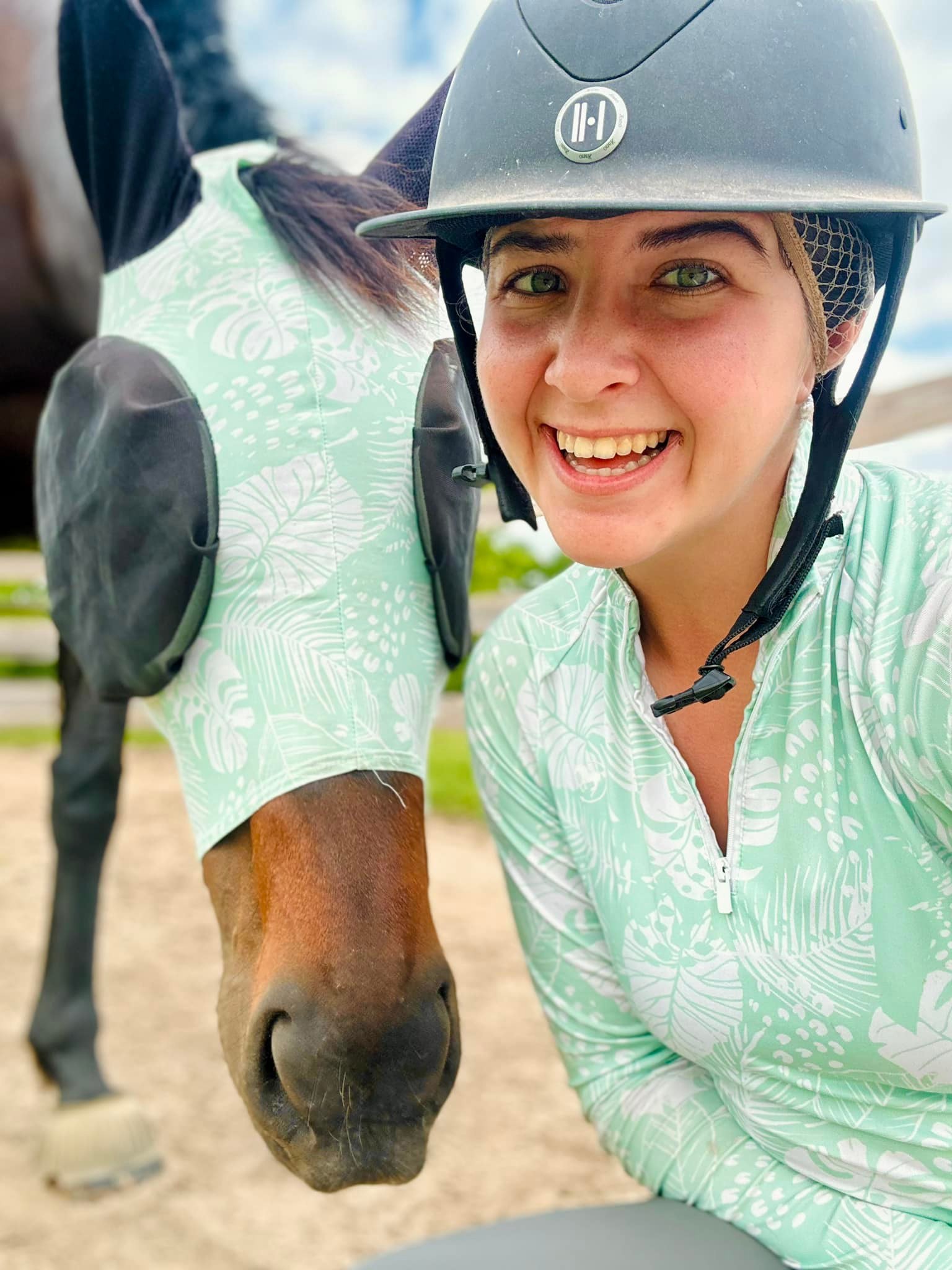
If you have a cold-backed horse, you already know the ritual. The ears go back when the saddle comes out. The back dips away from your hand during grooming. The first five minutes under saddle feel like you are riding a plank that is actively considering bucking you off. Some horses grow out of it with time and consistent work. Many do not. And in the meantime, every single ride starts with a horse who is telling you, clearly, that her back is not happy — and you are expected to figure out what to do about it.
The saddle pad is not a cure for a cold back. Nothing in this post is. But the pad that touches your horse’s back for every single ride is either adding to that tension or helping to mitigate it, and that distinction matters more than most people give it credit for.
This post contains affiliate links. If you shop through them I may earn a small commission at no extra cost to you — and you’ll get my reader benefits. I only feature gear I’d actually put on my own horses or wear for a full day in the saddle.
Benefab makes two pads I recommend specifically for the cold-backed, back-sensitive horse: the Therapeutic All-Purpose Saddle Pad and the Therapeutic Dressage Pad. One or the other will fit your discipline. Both are built around the same core technology and the same underlying goal: getting a tense, guarded back to soften before you ever ask the horse to work.
What “Therapeutic Fabric” Actually Means Here
I want to explain this once before I get into the products, because “therapeutic” gets applied to so many things that it has started to mean nothing.
Benefab’s pads are woven with mineral-infused fabric designed to absorb the horse’s own body heat and reflect it back as far-infrared energy. The result is gentle, consistent warmth applied directly to the back musculature from the moment you tack up. No electricity, no batteries, no separate step in your routine — you put the pad on, and it starts working.
For the cold-backed horse specifically, this matters because a significant part of what you are dealing with at the start of every ride is a back that is cold, tight, and not yet ready to move. Muscles that are cold contract more readily and release less willingly. The horse is not being dramatic — she is being a mammal. Introducing warmth early in the tacking-up process supports muscle relaxation and can encourage the back to soften before you ask her to carry weight and move forward.
I am not promising this eliminates cold-back behavior. Saddle fit, bodywork, training approach, and veterinary management are all part of that picture, and if your horse’s cold-back presentation is significant, those conversations need to happen with qualified professionals. What I am saying is that a pad that supports warmth and circulation from the first moment of contact is a meaningfully better starting point than a pad that does nothing but sit between the saddle and the horse’s back.
Therapeutic All-Purpose Saddle Pad — $99.95
The Therapeutic All-Purpose Saddle Pad is the right choice if you ride in a close-contact, jump, or AP saddle, or if you want one pad that can cross disciplines without looking out of place in a schooling context.
Construction: The pad has a quilted top panel in the therapeutic mineral fabric, with a spine channel to reduce pressure along the dorsal processes. The fit is standard square-pad dimensions — it sits well under most close-contact and AP saddles without bunching at the front or pulling tight across the wither.
What I notice in use: On horses who present with back tension at the start of work, I put this pad on during grooming — before bridling, before the saddle even comes out. Five to ten minutes of contact with the fabric while the horse stands and eats hay is enough to start the warmth cycle. By the time I am ready to saddle, the back feels measurably less guarded under my hand. This is not magic. It is targeted warmth doing exactly what warmth does to muscle tissue.
Who it suits: Any English rider not in a dedicated dressage saddle. Hunters, eventers, all-around working riders. If you school in a close-contact or AP and do not need the longer billets and squared flap of a dressage pad, this is your pad.
Who it does not suit: Riders in wide-tree or very forward-flap saddles may find the standard dimensions slightly short at the back. If your saddle panel extends further back than average, check the measurements against your saddle before ordering. This pad also does not replace a half pad if your fit requires shimming or profile adjustment — it works alongside a half pad, not instead of one.
One honest tradeoff: At $99.95 it is priced well above a basic cotton schooling pad. If your horse is not currently presenting tension or you are managing a horse who genuinely does fine at the start of work, you may not see returns that justify that price over a standard pad. But if cold-back behavior is a consistent feature of your rides, the daily use case is exactly what this pad was built for, and the price amortizes quickly.
Therapeutic Dressage Pad — $119.95
The Therapeutic Dressage Pad is the same technology in a dressage-specific cut. If you ride dressage — or in a dressage saddle for any reason — this is the version you want, and the $20 price difference over the all-purpose is appropriate given the additional fabric and the squared shape required to fit under a dressage flap cleanly.
Construction: Longer billets, squared corners, and a cleaner line under the dressage saddle flap. The spine channel is present here as well. The white colorway is show-appropriate out of the box — I have shown in mine without issue, and the fabric holds its color through regular washing without graying or yellowing.
What sets it apart from a standard dressage pad: Most white dressage pads are purely aesthetic. They protect the saddle from sweat and the horse from saddle friction. That is it. The Benefab Dressage Pad does that and runs the warmth cycle throughout the entire ride. For a horse who is tight through the thoracic spine, reluctant to swing through the back, or who takes four or five movements to start genuinely relaxing into the contact, the continuous warmth during work is a meaningful addition to your routine — not a replacement for training, but a support that runs in the background every single ride.
Who it suits: Dressage riders at any level. Working amateurs who school in a dressage saddle most of the time. Riders who want a pad that looks correct in the sandbox and does more than look correct.
Sizing note: Dressage pads are less variable in dimension than AP pads since most dressage saddles have fairly standardized flap geometry — but if you ride in a particularly large-paneled saddle or a baroque-style saddle with an extended rear gusset, confirm measurements before ordering.
Fit with a half pad: The Dressage Pad works cleanly over a sheepskin or foam half pad if you are using one. I typically run mine over a thin half pad on my mare and have had no bunching or shifting issues at the wither or spine channel.
Ready to try the Benefab Therapeutic Dressage Pad or All-Purpose Pad? Use my link for my reader benefits at Benefab → https://bit.ly/4uhqYoF
How I Build the Cold-Back Pad Into the Routine
The pad alone is not a routine. Here is how I actually use it with a back-sensitive horse so you get the most out of what it offers.
Start before the saddle. Place the Benefab pad on the horse’s back during grooming — before tacking up, while she is still at the crossties eating hay or simply standing. Even five minutes of contact starts the warmth cycle. By the time you put the saddle on, the back has already been working rather than sitting cold.
Pair with a thorough hand-check. Run both palms flat down either side of the spine before saddling. You are not diagnosing anything — you are gathering information. A back that is already beginning to release under the pad will feel different from a back that is still braced and cold. This also tells you whether today calls for a longer longe or warmup before you sit down.
Consider your warmup length. For the cold-backed horse, a longer warmup on the longe or in hand before mounting is not wasted time. It is where the back loosens at a lower-stakes moment. The pad continues to work during longe work under a surcingle, or you can leave it on until the moment you saddle.
Use it consistently, not occasionally. The riders who report the best results with therapeutic pads are the ones who use them for every ride, not as an occasional intervention when a horse seems particularly tight. Consistency is what makes this a management tool rather than a spot treatment.
I talk through warm-up and management routines for back-sensitive horses on the podcast — if this is an ongoing challenge in your barn, it is worth a listen.
Which Pad Is Right for You
| Therapeutic All-Purpose Pad | Therapeutic Dressage Pad | |
|---|---|---|
| Price | $99.95 | $119.95 |
| Cut | Standard English square | Dressage long-billet square |
| Show-appropriate | Schooling/hunter/eventing | Yes, dressage sandbox |
| Saddle compatibility | CC, AP, jump | Dressage |
| Best for | Multi-discipline riders, AP-saddle riders | Dressage riders, dressage-saddle users |
| Technology | Mineral-infused therapeutic fabric | Same |
| Spine channel | Yes | Yes |
If you are genuinely unsure which cut your saddle requires, default to asking based on your billet length. Long billets under the flap mean dressage pad. Short billets over the flap mean all-purpose or jump pad.
The Bottom Line
A cold-backed horse is communicating something real about how her back feels at the start of work. The pad you put on every day is one of the most direct points of contact you have with that back — and choosing one that actively supports warmth and circulation from the moment of contact is a small, consistent intervention that adds up across hundreds of rides.
The Therapeutic All-Purpose Saddle Pad is the right choice if you ride in an AP or close-contact saddle. The Therapeutic Dressage Pad is the right choice if you ride in a dressage saddle and want something that looks correct in the sandbox and works throughout the ride. Either one belongs in a serious management routine for the back-sensitive horse.
Neither pad replaces saddle fit evaluation, veterinary assessment, or bodywork. But as the daily fabric between your saddle and your horse’s back, they are the most thoughtful option I have found at this price point, and they have earned a permanent place in my tack room.
Ready to try Benefab for your cold-backed horse? Use my link for my reader benefits at Benefab → https://bit.ly/4uhqYoF