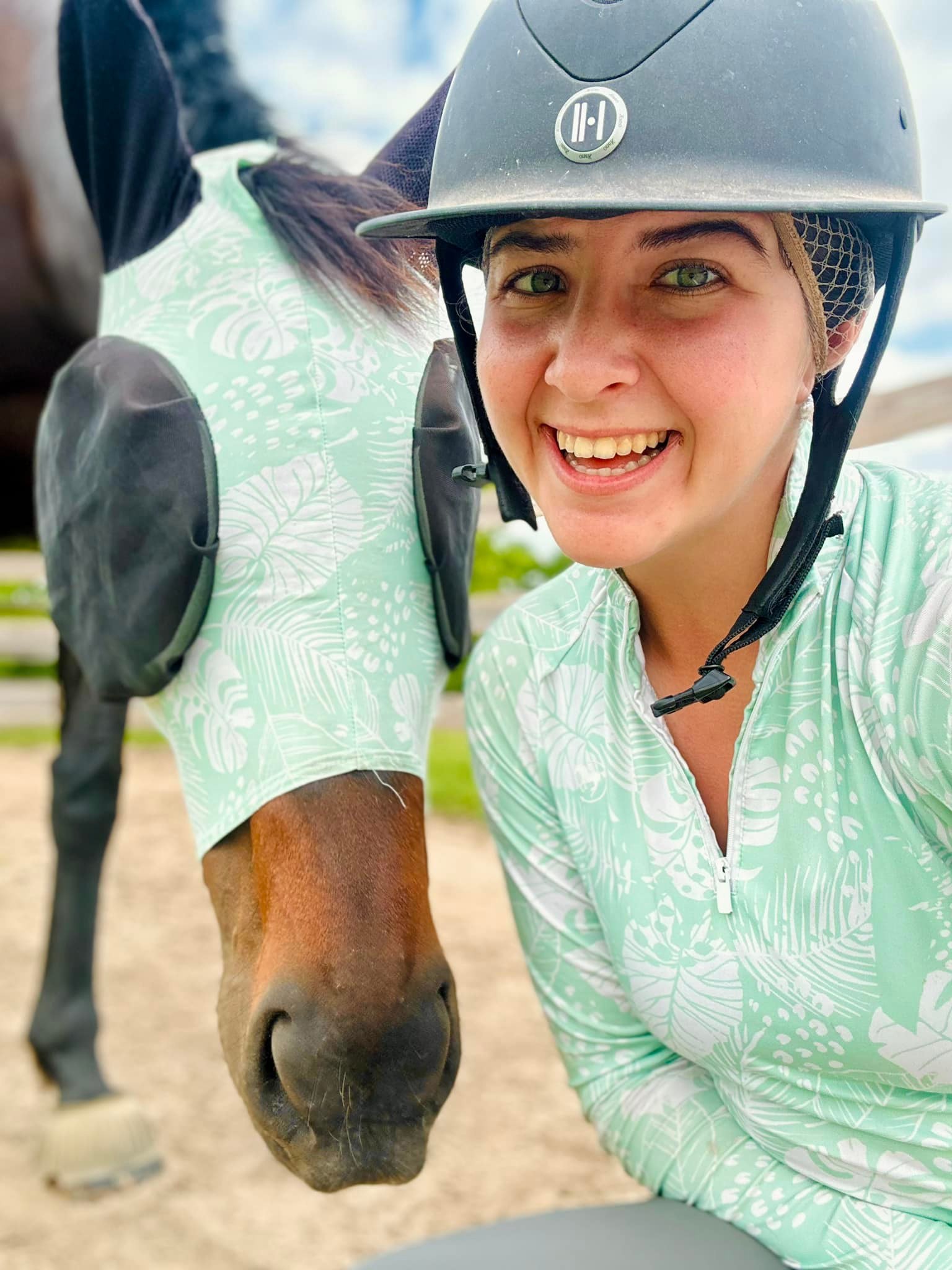
If you have a horse who is reactive about his feet — tense when you pick them out, fidgety when you apply boots, prone to stomping or striking when something touches below the fetlock — you already know that standard rubber bell boots can turn a minor irritation into a whole event. The sensitive-footed horse does not want one more thing clamped around his pastern that just holds heat and doesn’t do anything useful. But he still needs bell boots, especially if he’s overreaching or you’re working on hard ground. The question is whether there’s an option that actually supports his comfort rather than fighting it.
The Benefab Smart Bell Boots are my answer to that question, and below I’m going to walk through exactly who they’re right for, who might need to layer in another product, and what a realistic recovery-day routine looks like when you’re managing a horse with chronic lower-leg sensitivity.
This post contains affiliate links. If you shop through them I may earn a small commission at no extra cost to you — and you’ll get my reader benefits. I only feature gear I’d actually put on my own horses or wear for a full day in the saddle.
What Makes a Bell Boot “Therapeutic” — and Why It Matters for Sensitive Horses
Standard bell boots exist for one purpose: protect the heel bulbs from an overreaching hind foot. They do that job. They do nothing else. For most horses, that’s fine.
For the sensitive-footed horse, fine is not always enough. These are horses who often present as:
- Reactive when you run your hand down the lower leg
- Reluctant to stand quietly while boots are applied
- Prone to fussing or stomping during turnout
- Horses whose owners notice more tension or spookiness when lower-leg gear doesn’t fit right
The Benefab Smart Bell Boots are made with Benefab’s therapeutic fabric — the same woven mineral-infused material that runs through the rest of the product line. The fabric is designed to support circulation and warmth in the area it covers. For the pastern and heel bulb region, that means the boots are doing more than just sitting there. Many owners notice that horses who are tense about lower-leg handling begin to settle more during wear once they’ve been introduced to the boots gradually. That’s not magic. That’s a horse who finds the sensation comfortable rather than irritating.
Fit matters here more than almost anything else. These are pull-on style, which means sizing is not negotiable — too loose and they’ll rotate; too tight and you’ve created the exact problem you were trying to avoid. Benefab offers sizing guidance on the product page, and I’d encourage you to measure heel-bulb circumference carefully before ordering rather than guessing by general horse size. A warmblood-sized draft cross and a compact warmblood can wear completely different sizes despite both being labeled “large.”
Who this boot is right for: The overreaching horse who is also sensitive or reactive around the hoof and pastern. The horse in a recovery routine where you want every piece of gear to contribute to comfort, not just protection. The horse who has historically been difficult to boot because standard rubber makes him more agitated.
Who might want to look at something else first: If your horse’s sensitivity is primarily at the pastern rather than the heel bulb, or if you need a boot that can also cover high-impact sports protection with a reinforced strike plate, the Smart Bell Boot is not a schooling-XC overreach boot. Use it for recovery days, turnout, and lower-intensity work, and have a separate heavy-duty option for galloping sets.
Pairing the Smart Bell Boots with Pastern Wraps for a Full Lower-Leg Comfort Routine
The Benefab Therapeutic Pastern Wraps at $39.95 are a natural companion product for the sensitive-footed horse, and if you’re already investing in the Smart Bell Boots, the combination is worth understanding.
The Smart Bell Boots cover from just above the coronary band down over the heel bulbs. The Pastern Wraps cover the pastern joint itself — the area between the coronary band and the fetlock. These are different zones, and on a horse who presents with discomfort or tension throughout the lower leg, covering both gives you more complete support through the whole region.
What I like about the Pastern Wraps specifically is that they’re designed to conform closely to the pastern without bulk. They stay put without restricting movement, and the therapeutic fabric continues doing its job throughout wear. Available in Electric Blue, Royal Purple, Bubblegum Pink, and Black — so you can either match your setup or not, depending on how much you care about that sort of thing. I don’t.
The routine I’d suggest for a horse with real lower-leg sensitivity: Pastern Wraps on first, then Smart Bell Boots over the top. Let the horse stand for a few minutes before you move him. Many owners notice that giving a reactive horse a brief settling moment after application — rather than immediately moving into work — makes a measurable difference in how he carries himself during the session.
This is also a solid approach for horses who are stalled after work and have a tendency to stock up slightly around the lower legs. The combination supports circulation during the quiet period before and after work without requiring a full wrap job.
Ready to try the Smart Bell Boots and Pastern Wraps together? Use my link for my reader benefits at Benefab → https://bit.ly/4uhqYoF
Building a Recovery-Day Routine Around the Sensitive-Footed Horse
This is where I want to get practical, because products in isolation only go so far. A horse who is chronically reactive about his lower legs is telling you something — that he needs a thoughtful routine, not just a new boot.
On a recovery day for a horse like this, I’d think about the session in three phases.
Before work: Apply Pastern Wraps and Smart Bell Boots with a slow, deliberate hand. Let him stand. If he’s also tense through his poll and back — which many sensitive-footed horses are, because lower-leg reactivity rarely exists in a vacuum — consider adding a Therapeutic All-Purpose Saddle Pad to the warmup phase. The pad supports back comfort throughout the ride, which often has a downstream effect on how freely the horse moves through the lower leg. A horse who is bracing in his back will load his lower limbs differently.
During work: Keep the session appropriate to a recovery day. Light hacking, gentle flatwork, or hand-walking. The goal is movement without overload. The Smart Bell Boots are doing their job throughout — protecting the heel bulbs and supporting the area with warmth and circulation.
After work: Remove boots after the horse has cooled. Check the pastern and heel bulb area. On a horse who tends to stock up, consider whether the Therapeutic Smart QuickWraps belong in your overnight routine as well. They’re a different product — a full lower-leg wrap — but they extend the circulation-support work into the stall hours, which is often when stocking up happens. I covered the overnight wrapping routine in more depth on the blog if you want to dig into that piece. And if you’re thinking about how this all fits into a broader recovery philosophy for the sport horse, the podcast has some useful conversations on that front.
Quick Comparison: Smart Bell Boots vs. Pastern Wraps vs. QuickWraps
| Product | Zone Covered | Best For | Price |
|---|---|---|---|
| Smart Bell Boots | Heel bulbs and below | Overreaching protection + lower-leg comfort support | $59.95 |
| Therapeutic Pastern Wraps | Pastern joint | Pastern-area sensitivity, pre/post work comfort | $39.95 |
| Therapeutic Smart QuickWraps | Full lower leg (cannon to fetlock) | Overnight stocking-up, post-work recovery layering | $199.95 |
These three products do not compete with each other. They cover different anatomical zones and serve different moments in the daily routine. For the horse with real lower-leg sensitivity, having all three available means you can respond to what he needs on any given day — not just apply the same thing regardless of what’s going on.
The Bottom Line
The Benefab Smart Bell Boots are not a replacement for heavy-duty schooling overreach boots. What they are is the right tool for recovery days, turnout, and lower-intensity work when you have a horse who is reactive, tense, or uncomfortable around the hoof and pastern region. The therapeutic fabric supports circulation and warmth in an area that takes a lot of concussive load, and many owners find that horses who were difficult to boot begin to tolerate — and eventually relax into — the routine once the gear is consistently comfortable rather than irritating.
Pair them with the Pastern Wraps if you’re managing sensitivity throughout the lower leg. Add the QuickWraps if overnight stocking up is part of the picture. Build the routine slowly and consistently, and give the horse time to tell you whether it’s working.
Ready to start building a lower-leg comfort routine for your sensitive-footed horse? Use my link for my reader benefits at Benefab → https://bit.ly/4uhqYoF